Posted on April 6, 2015 by Ellen Brown
The politicians are put there to give you the idea that you have freedom of choice. You don’t. . . . You have owners. — George Carlin, The American Dream
According to a new study from Princeton University, American democracy no longer exists. Using data from over 1,800 policy initiatives from 1981 to 2002, researchers Martin Gilens and Benjamin Page concluded that rich, well-connected individuals on the political scene now steer the direction of the country, regardless of – or even against – the will of the majority of voters. America’s political system has transformed from a democracy into an oligarchy, where power is wielded by wealthy elites. Continue reading →
Filed under: Ellen Brown Articles/Commentary | Tagged: democracy, monetary reform, oligarchy, public banking | 98 Comments »
Posted on March 10, 2015 by Ellen Brown
Remember when the infamous Goldman Sachs delivered a thinly-veiled threat to the Greek Parliament in December, warning them to elect a pro-austerity prime minister or risk having central bank liquidity cut off to their banks? (See January 6th post here.) It seems the European Central Bank (headed by Mario Draghi, former managing director of Goldman Sachs International) has now made good on the threat. Continue reading →
Filed under: Ellen Brown Articles/Commentary | Tagged: central banks, ECB, Goldman Sachs, Greek crisis, public banking | 56 Comments »
Posted on February 20, 2015 by Ellen Brown
The fliers touted new ballfields, science labs and modern classrooms. They didn’t mention the crushing debt or the investment bank that stood to make millions.
— Melody Peterson, Orange County Register, February 15, 2013
Remember when Goldman Sachs – dubbed by Matt Taibbi the Vampire Squid – sold derivatives to Greece so the government could conceal its debt, then bet against that debt, driving it up? It seems that the ubiquitous investment bank has also put the squeeze on California and its school districts. Not that Goldman was alone in this; but the unscrupulous practices of the bank once called the undisputed king of the municipal bond business epitomize the culture of greed that has ensnared students and future generations in unrepayable debt. Continue reading →
Filed under: Ellen Brown Articles/Commentary | Tagged: Bank of North Dakota, capital appreciation bonds, Goldman Sachs, public banking | 39 Comments »
Posted on January 6, 2015 by Ellen Brown
Greece and the troika (the International Monetary Fund, the EU, and the European Central Bank) are in a dangerous game of chicken. The Greeks have been threatened with a “Cyprus-Style prolonged bank holiday” if they “vote wrong.” But they have been bullied for too long and are saying “no more.”
A return to the polls was triggered in December, when the Parliament rejected Prime Minister Antonis Samaras’ pro-austerity candidate for president. In a general election, now set for January 25th, the EU-skeptic, anti-austerity, leftist Syriza party is likely to prevail. Syriza captured a 3% lead in the polls following mass public discontent over the harsh austerity measures Athens was forced to accept in return for a €240 billion bailout.
Austerity has plunged the economy into conditions worse than in the Great Depression. As Professor Bill Black observes, the question is not why the Greek people are rising up to reject the barbarous measures but what took them so long.
Ireland was similarly forced into an EU bailout with painful austerity measures attached. A series of letters has recently come to light showing that the Irish government was effectively blackmailed into it, with the threat that the ECB would otherwise cut off liquidity funding to Ireland’s banks. The same sort of threat has been leveled at the Greeks, but this time they are not taking the bait. Continue reading →
Filed under: Ellen Brown Articles/Commentary | Tagged: ECB, EU, Goldman Sachs, Greek crisis, public banking, troika | 67 Comments »
Posted on January 1, 2015 by Ellen Brown
Posted on December 19, 2014 by Ellen Brown
The sudden dramatic collapse in the price of oil appears to be an act of geopolitical warfare against Russia. The result could be trillions of dollars in oil derivative losses; and depositors and taxpayers could be liable, following repeal of key portions of the Dodd-Frank Act signed into law on December 16th.
On December 11th, Senator Elizabeth Warren charged Citigroup with “holding government funding hostage to ram through its government bailout provision.” At issue was a section in the omnibus budget bill repealing the Lincoln Amendment to the Dodd-Frank Act, which protected depositor funds by requiring the largest banks to push out a portion of their derivatives business into non-FDIC-insured subsidiaries.
Warren and Representative Maxine Waters came close to killing the spending bill because of this provision. But the tide turned, according to Waters, when not only Jamie Dimon, CEO of JPMorgan Chase, but President Obama himself lobbied lawmakers to vote for the bill. Continue reading →
Filed under: Ellen Brown Articles/Commentary | Tagged: bail-in, bailout, Dodd-Frank, Elizabeth Warren, public banking | 39 Comments »
Posted on December 12, 2014 by Ellen Brown
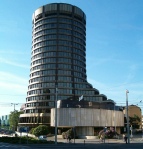
On December 11, 2014, the US House passed a bill repealing the Dodd-Frank requirement that risky derivatives be pushed into big-bank subsidiaries, leaving our deposits and pensions exposed to massive derivatives losses. The bill was vigorously challenged by Senator Elizabeth Warren; but the tide turned when Jamie Dimon, CEO of JPMorganChase, stepped into the ring. Perhaps what prompted his intervention was the unanticipated $40 drop in the price of oil. As financial blogger Michael Snyder points out, that drop could trigger a derivatives payout that could bankrupt the biggest banks. And if the G20’s new “bail-in” rules are formalized, depositors and pensioners could be on the hook.
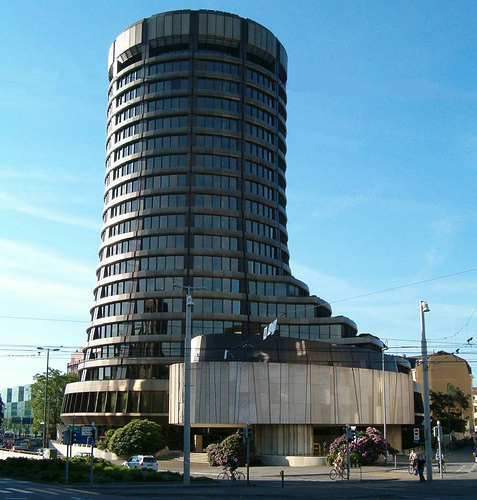
The new bail-in rules were discussed in my last post here. They are edicts of the Financial Stability Board (FSB), an unelected body of central bankers and finance ministers headquartered in the Bank for International Settlements in Basel, Switzerland. Where did the FSB get these sweeping powers, and is its mandate legally enforceable? Continue reading →
Filed under: Ellen Brown Articles/Commentary | Tagged: bail-in, Bank for International Settlements, derivatives, G20 Financial Stability Board, oil prices, public banking | 44 Comments »
Posted on December 10, 2014 by Ellen Brown
Posted on November 19, 2014 by Ellen Brown
While 49 state treasuries were submerged in red ink after the 2008 financial crash, one state’s bank outperformed all others and actually launched an economy-shifting new industry. So reports the Wall Street Journal this week, discussing the Bank of North Dakota (BND) and its striking success in the midst of a national financial collapse led by the major banks. Chester Dawson begins his November 16th article:
It is more profitable than Goldman Sachs Group Inc., has a better credit rating than J.P. Morgan Chase & Co. and hasn’t seen profit growth drop since 2003. Meet Bank of North Dakota, the U.S.’s lone state-owned bank, which has one branch, no automated teller machines and not a single investment banker.
Continue reading →
Filed under: Ellen Brown Articles/Commentary | Tagged: Bakken oil boom, Bank of North Dakota, public banking | 81 Comments »
Posted on November 16, 2014 by Ellen Brown
I just got back from a really good and productive week in Ireland. Haven’t gotten an article out but thought I would post these two articles that were in the local Irish press (online and print). Two interviews are yet to be published, plus two video interviews (with the UK Guardian and Rabobank); so public banking got a lot of exposure.

Public Banking can become real ‘Third Force’ in Irish finance
Friday 7th November 2014, Dublin.
Green Party Finance Spokesperson, Cllr Mark Dearey, has today spoken of the positive benefits that the introduction of public banking could have for the Irish financial market. The creation of a publicly-held banking network, acting as a competitor to the existing private commercial banks, would be a disruptive and much needed shot in the arm for the current arrangement. Cllr Dearey made his comments following a productive meeting with the founder and President of the Public Banking Institute, Dr Ellen Brown, who is in Ireland to participate in the Kilkenomics festival.
Gavin McLoughlin, Irish Independent, 07/11/2014
Ellen Brown, a co-founder of the US-based Public Banking Institute, doesn’t mince her words. She’s among the speakers at the fifth Kilkenomics festival, which began yesterday.
“My purpose in being there and what I hope to introduce is that you can fix a lot of your economic problems by having some publicly owned banks.”
It’s not about nationalising the system, says Brown. Rather the idea is to have a number of banks that can return profits to the public rather than to shareholders.
“It’s a no-brainer once you get it,” she says.
Read more here.
Filed under: In the News | Tagged: Irish banking crisis, public banking | 4 Comments »
Posted on November 2, 2014 by Ellen Brown
I’m off to Ireland tomorrow to participate in the Kilkenny Festival and to help with the movement there for a network of publicly-owned banks. The Public Banking Forum of Ireland sent a quite promising report on developments that I thought I would post in the meantime, titled Exploring the Sparkassen Model of Local Savings Banks in Ireland with the Savings Bank Foundation for International Cooperation (SBFIC). It can be read here:
Sparkassen Model in Ireland Oct (1)
(I had a bit of trouble loading it; if it doesn’t come up, there is much similar information on the PBFI website.)
Filed under: In the News | Tagged: Irish banking crisis, public banking | 13 Comments »
Posted on October 26, 2014 by Ellen Brown
Many authorities have said it: banks do not lend their deposits. They create the money they lend on their books.
Robert B. Anderson, Treasury Secretary under Eisenhower, said it in 1959:
When a bank makes a loan, it simply adds to the borrower’s deposit account in the bank by the amount of the loan. The money is not taken from anyone else’s deposits; it was not previously paid in to the bank by anyone. It’s new money, created by the bank for the use of the borrower.
The Bank of England said it in the spring of 2014, writing in its quarterly bulletin:
The reality of how money is created today differs from the description found in some economics textbooks: Rather than banks receiving deposits when households save and then lending them out, bank lending creates deposits.
. . . Whenever a bank makes a loan, it simultaneously creates a matching deposit in the borrower’s bank account, thereby creating new money.
All of which leaves us to wonder: If banks do not lend their depositors’ money, why are they always scrambling to get it? Banks advertise to attract depositors, and they pay interest on the funds. What good are our deposits to the bank? Continue reading →
Filed under: Ellen Brown Articles/Commentary | Tagged: Bank of North Dakota, Basel III, public banking | 35 Comments »
Posted on October 22, 2014 by Ellen Brown
The Pennsylvania Project hosted the East Coast edition of the Public Banking Institute national conference in Philadelphia last Saturday. Thanks Pennsylvania team!
I thought I would post my power point presentation (the sixth I’ve done since July), since it has a more complete discussion of the pressing issue always on the minds of elected officials: “Where will we find the money to capitalize our new public bank?” The relevant slides are at 21-26, expanding on the plan suggested in my article of October 12th titled Building an Ark: How to Protect Public Revenues from the Next Meltdown. The power point is here:
Power point – Philadelphia – 10-18-14
Filed under: Ellen Brown Articles/Commentary | Tagged: public banking | 5 Comments »
Posted on October 12, 2014 by Ellen Brown
Concerns are growing that we are heading for another banking crisis, one that could be far worse than in 2008. But this time, there will be no government bailouts. Instead, per the Dodd-Frank Act, bankrupt banks will be confiscating (or “bailing in”) their customers’ deposits.
That includes local government deposits. The fact that public funds are secured with collateral may not protect them, as explained earlier here. Derivative claims now get paid first in a bank bankruptcy; and derivative losses could be huge, wiping out the collateral for other claims.
In a September 24th article titled “5 U.S. Banks Each Have More Than 40 Trillion Dollars In Exposure To Derivatives, Michael Snyder warns:
Trading in derivatives is basically just a form of legalized gambling, and the “too big to fail” banks have transformed Wall Street into the largest casino in the history of the planet. When this derivatives bubble bursts (and as surely as I am writing this it will), the pain that it will cause the global economy will be greater than words can describe.
Continue reading →
Filed under: Ellen Brown Articles/Commentary | Tagged: Bank of North Dakota, banking crisis, public banking | 22 Comments »
Posted on October 2, 2014 by Ellen Brown
The Santa Fe Public Banking Conference last weekend was a great success. The videotaped event can be seen here.
Our guest on “It’s Our Money” on PRN next Wednesday, October 8th, will be Richard Wolff, the keynote speaker in Santa Fe. Listen at noon PST/3 pm EST or on archive here.
The Praxis Peace Economics of Sustainability Conference is coming up next week in San Francisco. I’ll be speaking at 10:30 am on Wednesday the 8th. Details here.
The Philadelphia Public Banking conference is on October 18. Details here.
Would love to see you at one of these events! Ellen
Filed under: In the News, Networking, videos | Tagged: public banking | 2 Comments »
Posted on September 24, 2014 by Ellen Brown
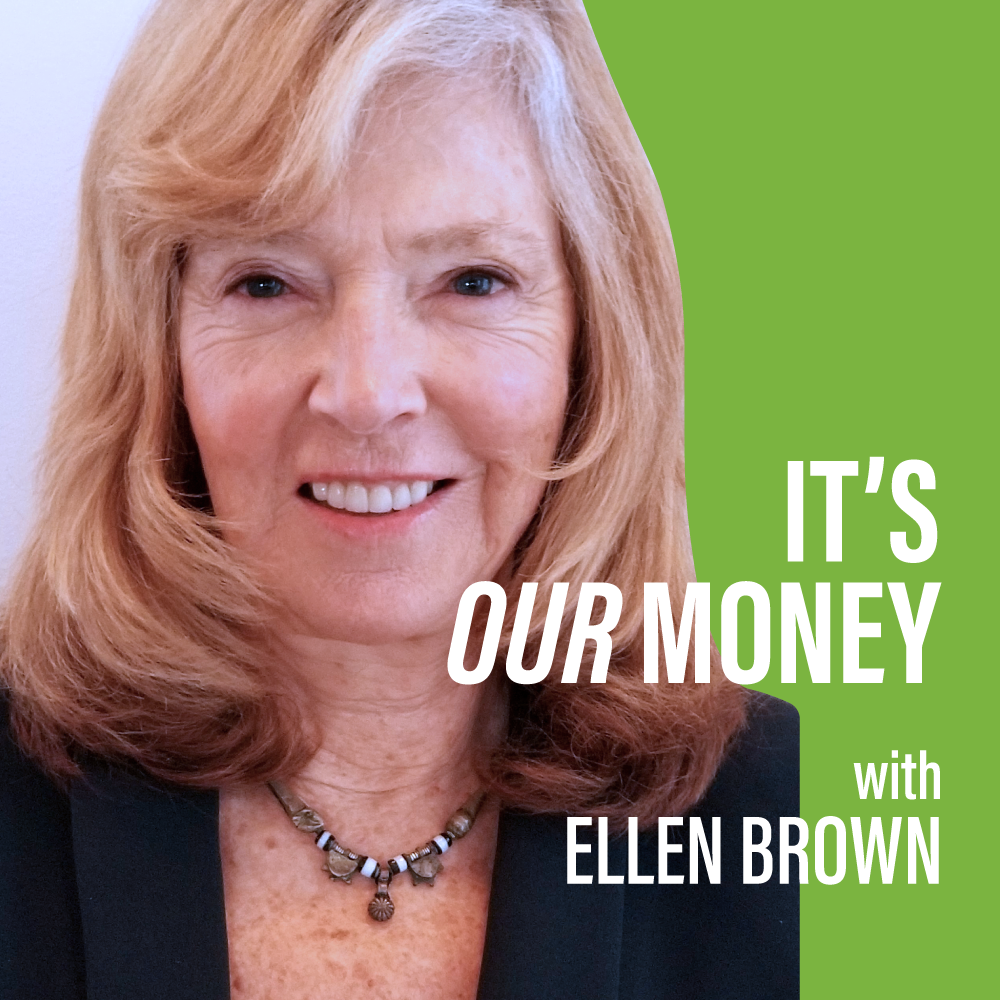
Show #14: What’s the Alternative?
The broad-based economic destruction brought on by extractive private banking has gotten lots of people thinking hard about alternatives. The Scots came close to starting on a new path in recent weeks that could still materialize with some re-focusing on its banking options, while the possible recurrence of big bank failures has many Americans actively looking for alternatives. In this edition of “It’s Our Money” Ellen holds a
foundational conversation with globally-recognized economic theorist Christopher Cook about how a new world of monetary management could be realized for the benefit of all. Meanwhile, citizens are rallying their national public bank initiatives at the upcoming “Banking on New Mexico” symposium. Co-host Walt McRee speaks with project founder, author and diplomat Craig Barnes about what’s brewing in Santa Fe.
Filed under: Ellen Brown Articles/Commentary | Tagged: public banking, Scottish independence | 1 Comment »
Posted on September 22, 2014 by Ellen Brown
I’ll be speaking at the Philadelphia and Santa Fe conferences described in the press release below, as well as at the Economics of Sustainability conference in San Francisco Oct 6-9 and the Kilkenomics Festival in Kilkenny, Ireland, November 6-9. Should be fun! Ellen
Update: The Main Session of the Santa Fe event on September 27th will be streamed here from 1025a to 930p: https://new.livestream.com/streamingnm/bankingnmmain. The single Side Session will be streamed here from 1025a to 1200p: https://new.livestream.com/streamingnm/bankingnmside.
For immediate release —
Public bank advocates gather in Philadelphia: Seek to boost local banks over Wall Street
September 15, 2014 (Philadelphia) — Public bank advocates from the eastern U.S. will hold a one day conference in Philadelphia on October 18, to advance efforts to form public banks in U.S. cities and states.
A similar conference is being held for the western U.S. in Santa Fe, NM on September 27. Santa Fe recently became the first U.S. city to take formal steps to establish its own bank. Continue reading →
Filed under: In the News | Tagged: public banking | 10 Comments »
Posted on September 17, 2014 by Ellen Brown
Scottish voters will go to the polls on September 18th to decide whether Scotland should become an independent country. As video blogger Ian R. Crane colorfully puts the issues and possibilities:
[T]he People of Scotland have an opportunity to extricate themselves from the socio-psychopathic global corporatists and the temple of outrageous and excessive abject materialism. However, it is not going to be an easy ride . . . .
If Alex Salmond and the SNP [Scottish National Party] are serious about keeping the Pound Stirling as the Currency of Scotland, there will be no independence. Likewise if Scotland embraces the Euro, Scotland will rapidly become a vassel state of the Euro-Federalists, who will asset strip the nation in the same way that, Greece, Ireland, Portugal and Spain have been stripped of their entire national wealth and much of their national identity.
Continue reading →
Filed under: Ellen Brown Articles/Commentary | Tagged: Bank of North Dakota, public banking, Scottish independence | 23 Comments »
Posted on September 8, 2014 by Ellen Brown
In an inscrutable move that has alarmed state treasurers, the Federal Reserve, along with the Federal Deposit Insurance Corporation and the Office of the Comptroller of the Currency, just changed the liquidity requirements for the nation’s largest banks. Municipal bonds, long considered safe liquid investments, have been eliminated from the list of high-quality liquid collateral. assets (HQLA). That means banks that are the largest holders of munis are liable to start dumping them in favor of the Treasuries and corporate bonds that do satisfy the requirement. Continue reading →
Filed under: Ellen Brown Articles/Commentary | Tagged: Basel III, Federal Reserve, municipal bonds, public banking | 34 Comments »
Posted on September 1, 2014 by Ellen Brown
You can always count on Americans to do the right thing, after they’ve tried everything else. —Winston Churchill
When an article appears in Foreign Affairs, the mouthpiece of the policy-setting Council on Foreign Relations, recommending that the Federal Reserve do a money drop directly on the 99%, you know the central bank must be down to its last bullet.
The September/October issue of Foreign Affairs features an article by Mark Blyth and Eric Lonergan titled “Print Less But Transfer More: Why Central Banks Should Give Money Directly To The People.” It’s the sort of thing normally heard only from money reformers and Social Credit enthusiasts far from the mainstream. What’s going on? Continue reading →
Filed under: Ellen Brown Articles/Commentary | Tagged: Federal Reserve, national dividend, public banking, quantitative easing | 86 Comments »



 WEB OF DEBT BLOG
How America Became an Oligarchy
According to a new study from Princeton University, American democracy no longer exists. Using data from over 1,800 policy initiatives from 1981 to 2002, researchers Martin Gilens and Benjamin Page concluded that rich, well-connected individuals on the political scene now steer the direction of the country, regardless of – or even against – the will of the majority of voters. America’s political system has transformed from a democracy into an oligarchy, where power is wielded by wealthy elites. Continue reading →
Filed under: Ellen Brown Articles/Commentary | Tagged: democracy, monetary reform, oligarchy, public banking | 98 Comments »