In 2022, the state of California celebrated a record budget surplus of $97.5 billion. Two years later, according to the Legislative Analyst’s Office, this surplus has plummeted to a record budget deficit of $73 billion. Balancing the budget will be challenging. Unlike the federal government, the state cannot just drive up debt and roll it over year after year. The California Balanced Budget Act, passed in 2004, requires the state legislature to pass a balanced budget every year.
The usual solutions are to cut programs or raise taxes, but both approaches are facing an uphill battle. Raising taxes would require a two-thirds vote of the legislature, which would be very challenging, and worthy public programs are in danger of getting axed, including homelessness prevention and funding for low-income housing.
A third possibility might be to increase the income tax base and state income by stimulating the economy with a state-owned depository bank. The state-owned Bank of North Dakota, which has raised record profits for its state, is a stellar example. In a review of states with the healthiest budgets based on data from the PEW Charitable Trusts, U.S. News & World Report puts North Dakota at No. 1 in Budget Balancing and #1 in Short-term Fiscal Stability.
California has an Infrastructure and Development Bank, which is already capitalized and has an established track record of prudent and productive lending, but it is not a depository bank and its reach is small. Transforming it into a depository bank would be fairly uncomplicated and could substantially increase its reach.
But first a look at what happened to the state’s copious revenues.
Continue reading →
Filed under: Ellen Brown Articles/Commentary | Tagged: Bank of North Dakota, banking, economy, Ellen Brown, homelessness, public banking, UNEMPLOYMENT CRISIS | Leave a comment »




 WEB OF DEBT BLOG
Tackling California’s Budget Crisis: Raise Taxes, Cut Programs, or Form a Bank?
In 2022, the state of California celebrated a record budget surplus of $97.5 billion. Two years later, according to the Legislative Analyst’s Office, this surplus has plummeted to a record budget deficit of $73 billion. Balancing the budget will be challenging. Unlike the federal government, the state cannot just drive up debt and roll it over year after year. The California Balanced Budget Act, passed in 2004, requires the state legislature to pass a balanced budget every year.
The usual solutions are to cut programs or raise taxes, but both approaches are facing an uphill battle. Raising taxes would require a two-thirds vote of the legislature, which would be very challenging, and worthy public programs are in danger of getting axed, including homelessness prevention and funding for low-income housing.
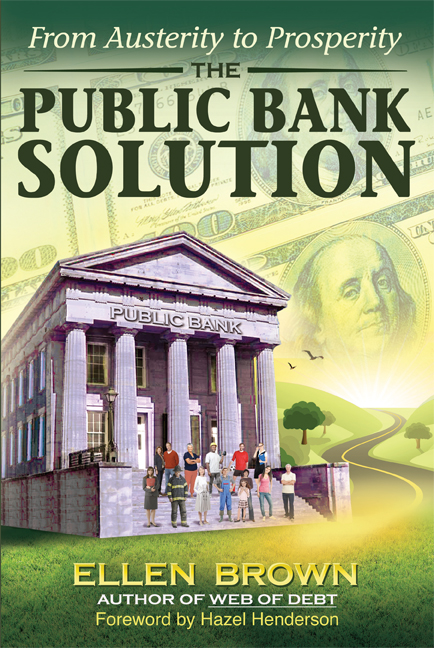
A third possibility might be to increase the income tax base and state income by stimulating the economy with a state-owned depository bank. The state-owned Bank of North Dakota, which has raised record profits for its state, is a stellar example. In a review of states with the healthiest budgets based on data from the PEW Charitable Trusts, U.S. News & World Report puts North Dakota at No. 1 in Budget Balancing and #1 in Short-term Fiscal Stability.
California has an Infrastructure and Development Bank, which is already capitalized and has an established track record of prudent and productive lending, but it is not a depository bank and its reach is small. Transforming it into a depository bank would be fairly uncomplicated and could substantially increase its reach.
But first a look at what happened to the state’s copious revenues.
Continue reading →Filed under: Ellen Brown Articles/Commentary | Tagged: Bank of North Dakota, banking, economy, Ellen Brown, homelessness, public banking, UNEMPLOYMENT CRISIS | Leave a comment »